Showing posts with label Manufacturing. Show all posts

Monday, June 17, 2013

Rentokil Provides Pest Control as Part of HACCP Compliance in the Food Manufacturing Industry


Cape Town, South Africa (PRWEB UK) 11 April 2013

Companies involved in the food processing and manufacturing industries have always been required to uphold the strictest health and safety requirements to ensure that their food products are safe for consumers. Now, ever-tightening policies and regulations for example the Consumer Protection Act (CPA) - take those requirements to new heights and require that the source of any failings in the food chain be accurately pinpointed. Companies in the food industry are now required to have accredited certification proving that all potential risks have been managed.


One way of managing these food safety risks is by turning to HACCP. HACCP (Hazard Analysis and Critical Control Point) is system devised to ensure the quality of the end-product of virtually any process, although it is applied most commonly to the food manufacturing process. Rather than a set of rules, this system is a tool to assess the hazards inherent in all main steps of a manufacturing operation and to establish control systems that implement preventative measures critical to the safety of the end-product, rather than relying on testing the end product.


In the 30 years since its inception HACCP has been widely adopted to ensure that food is safe for consumption, and has become the standard for ensuring food safety at every stage; from preparation, processing, manufacturing, transportation, distribution and handling to packaging, storing, supplying, selling and consuming.


An effective pest control programme is a vital part of the preventative measures required by HACCP in the food industry. Pests in high risk food processing areas pose a threat to human health and must be controlled. However, this approach must also address the potential risk of contamination of food products with pesticides. These two factors can often be in direct conflict, and therefore require very careful management by a registered, professional pest control company such as Rentokil. In a HACCP environment the prevention of pests should take priority, rather than the destruction of pests using chemical methods. This requires working in partnership with a reputable provider - such as Rentokil - to implement an integrated pest management system.


The biggest pest risks facing the food manufacturing industry are those presented by flying insects, stored product insects and rodents. As potential carriers of the bacteria that cause dysentery, gastroenteritis and salmonellosis, flies pose a real health risk as they move from decaying matter to food and other surfaces. Effective flying insect control is therefore critical. Luminos electric fly killer units from Rentokil are designed for industrial use in sensitive areas, and are far more effective than conventional fly zapping devices. The Luminos electric fly killer system works with a patented adhesive film technology which hygienically encapsulates insects and eliminates the risk of contamination by fragments. Luminos units get rid of flies efficiently, and their effectiveness has been verified by SINTEF, the independent Scandinavian research organisation.


Stored product pests are another big risk to the food manufacturing industry, and it is vital to protect valuable raw food materials in storage and warehouse rooms effectively. Rentokil offers glue traps with species-specific pheromone bait, and pheromone traps which allow for efficient monitoring and control of the pest population. Bulk cargo and container fumigation can prove reliable solutions for difficult to treat areas, and should always be administered by a pest control professional trained in fumigation.


Rats and mice carry various bacterial and viral pathogens; another serious risk in the food industry. Rentokil offers a wide range of professional rodent control solutions to get rid of rats and mice, including monitoring systems, non-toxic control methods and rodenticides. The method of treatment is always selected carefully to suit the requirements of the protected area and to ensure compliance with HACCP criteria. By selecting the most appropriate combination of baits, rat and mouse traps, detection boxes and treatments, Rentokil will prevent rodent migrations in to sensitive food processing and storage areas.


The consequences of a pest infestation can be severe. Failing an audit can put your business at risk, as can prosecution for non-compliance with relevant laws. Then there is the financial cost of damaged goods and materials, production downtime, and product recalls, not to mention customer compensation. And on top of all of this there is the loss of brand reputation that comes with a product recall or customer lawsuit. Can your business afford to take those risks?


About Rentokil Initial: The Rentokil Initial group specialise in pest control, hygiene services and interior landscaping for businesses across the globe. Using leading-edge, environmentally-friendly technology, their experts deliver a wide range of tailored services to businesses of all kinds. Read more about Rentokil's Pest Control services in the food manufacturing industry, or to arrange for a free pest control survey of your business, contact 0800 117 851.






Saturday, June 15, 2013

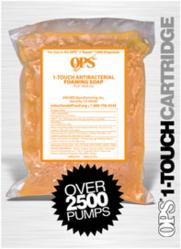
Archer Manufacturing Introduces Waste Free OPS


San Francisco, CA (PRWEB) November 28, 2012

Archer Manufacturing produces the highest quality, durable, and vandal proof soap dispensers on the market. Today they have announced the introduction of high yield refillable soap cartridges for use in their OPS

Cosmetic and Beauty Products Manufacturing in Canada Industry Market Research Report Now Available from IBISWorld


Los Angeles, CA (PRWEB) February 07, 2013

The Cosmetic and Beauty Products Manufacturing industry is a mature one, providing widely accepted and necessary personal care products to downstream consumers. Revenue growth is determined by demand from wholesalers and retailers, which is ultimately driven by consumer spending, tastes and preferences. During the five years to 2012, industry revenue has grown at meager 0.7% per year on average to an estimated $ 1.7 billion. A decline in per capita disposable income in 2009 hurt industry performance from 2009 to 2011 due to weakened demand for high-margin luxury products, says IBISWorld industry analyst Nikoleta Panteva. Still, sustained increases in disposable income are expected to underpin revenue growth of 2.9% in 2012.


Profit margins (i.e. earnings before interest and tax) are slim for the average Cosmetic and Beauty Products Manufacturing industry operator. The high and rising price of crude oil, which represents a key input in most industry products, has cut into industry profitability over the past five years. Coupled with intense competition, this scenario makes for a tough operating environment. Internal competition exists among operators on the basis of price, quality and ingredients. Over the past five years, the focus on organically-derived inputs has risen, urging more companies to introduce natural products. Industry participants also face external competition from imports. Imports satisfy 94.9% of the domestic demand for cosmetics and have risen from 89.2% over the past five years. As the Canadian dollar has appreciated, gaining strength against its trading partners' currencies, foreign-made goods have become relatively cheaper domestically, adds Panteva. In 2009, the Canadian dollar gained significant strength over the US dollar, causing imports to jump. IBISWorld anticipates this trend will continue over the next five years as the domestic currency continues its upward trend.


Over the past five years, market share concentration has increased due to major players' ability to thrive in difficult operating environments. Well-recognized brand names like those of Unilever and Procter & Gamble, the availability of non-discretionary products (e.g. shampoo and sunscreen) and strong bargaining power with upstream suppliers have allowed the industry's largest players to grow even as other manufacturers have suffered.


Revenue is also projected to fare better over the next five years. Per capita disposable income is expected to continue rising slowly, resulting in stronger downstream demand from wholesalers and retailers. Nevertheless, competition will remain a key feature, pushing operators out of the industry. For more information, visit IBISWorlds Cosmetic and Beauty Products Manufacturing in Canada industry report page.


Follow IBISWorld on Twitter: https://twitter.com/#!/IBISWorld

Friend IBISWorld on Facebook: http://www.facebook.com/pages/IBISWorld/121347533189


IBISWorld industry Report Key Topics


This industry prepares, blends, compounds and packages beauty products and cosmetics. Products included in this industry are perfumes, make-up items, hair preparations, face creams, lotions and other toiletries. Toothpastes are not included in this industry.


Industry Performance

Executive Summary

Key External Drivers

Current Performance

Industry Outlook

Industry Life Cycle

Products & Markets

Supply Chain

Products & Services

Major Markets

Globalization & Trade

Business Locations

Competitive Landscape

Market Share Concentration

Key Success Factors

Cost Structure Benchmarks

Barriers to Entry

Major Companies

Operating Conditions

Capital Intensity

Key Statistics

Industry Data

Annual Change

Key Ratios


About IBISWorld Inc.

Recognized as the nations most trusted independent source of industry and market research, IBISWorld offers a comprehensive database of unique information and analysis on every US and Canadian industry. With an extensive online portfolio, valued for its depth and scope, the company equips clients with the insight necessary to make better business decisions. Headquartered in Los Angeles, IBISWorld serves a range of business, professional service and government organizations through more than 10 locations worldwide. For more information, visit http://www.ibisworld.ca or call 1-800-330-3772.


Global Cosmetics Manufacturing Industry Market Research Report from IBISWorld has Been Updated


Los Angeles, CA (PRWEB) March 25, 2013

The Global Cosmetics Manufacturing industry is a dynamic one, characterized by a high degree of innovation and the introduction of new and reformulated products. The past five years have been no exception, despite declining per capita disposable income in key consumer markets. Due to consumers' tightened purse strings, industry revenue grew only 1.5% in 2009, the midst of the global recession. Profit also suffered as shoppers opted for lower-priced personal care products. The mounting focus on naturally derived toiletries has also underpinned industry performance over the past five years. Operators have responded to changing consumer preferences for chemical-free cosmetics formulas by introducing and reformulating popular products like shampoos and lotions, says IBISWorld industry analyst Radia Amari. Global cosmetics manufacturers are also focusing on natural makeup options, a growing industry segment. Developing natural makeup products has been difficult because of different challenges like pigment load and ease of application; however, new technologies are emerging that are eliminating some of these challenges.


Demand from emerging economies and aspirational shoppers has also kept the Global Cosmetics Manufacturing industry growing over the past five years, with revenue increases averaging 3.0% per year to reach $ 243.0 billion by the end of 2013. Industry operators have consistently expanded their portfolios to cater to underserved markets, where average incomes are well below the average product price, adds Amari. Moreover, to capture the growing aspirational shopper market (i.e. consumers on a budget seeking designer purchases), firms have integrated high-end cosmetic brands under their umbrellas. IBISWorld expects these efforts, along with improving economic conditions, will drive industry growth during 2013, with revenue increasing 2.4%.


In 2013, IBISWorld estimates that the industry has a moderate level of concentration. Industry concentration has gradually increased over the past five years, in line with acquisitions, whereby large multinational corporations acquire smaller companies. Merger and acquisition (M&A) deals of interest over the past decade that have served to change the face of the industrys landscape include major player Procter & Gamble's $ 57.0 billion takeover of Gillette, L'Oreal's acquisition of the Body Shop, the purchases of Kanebo and Molton Brown by Japanese-based Kao, and Coty's acquisition of Unilever's fragrance division. Other key drivers underlying the ongoing spate of M&A activity include the expansion of geographic footprints, diversification into new product categories or market segments and the exploitation of new technologies, including novel delivery systems and new greener technologies and processes.


As per capita disposable income rebounds more strongly over the five years to 2018, the industry will experience even stronger growth. Armed with deeper pockets, consumers especially those in developed markets will be more willing and able to spend on higher-priced products, leading to higher average profit margins for operators. Additionally, players' efforts to cater to emerging economies will also continue to pay off, further boosting industry growth. For more information, visit IBISWorlds Global Cosmetics Manufacturing industry report page.


Follow IBISWorld on Twitter: https://twitter.com/#!/IBISWorld

Friend IBISWorld on Facebook: http://www.facebook.com/pages/IBISWorld/121347533189


IBISWorld industry Report Key Topics


This industry prepares, blends, compounds and packages toilet preparations and personal-care products, including perfumes and fragrances, hair care, makeup, oral care, personal hygiene and skin care. Players in this industry are large multinational organizations that operate around the globe. Industry products are predominantly sold in downstream grocery, mass merchandisers and specialty retail stores.


Industry Performance

Executive Summary

Key External Drivers

Current Performance

Industry Outlook

Industry Life Cycle

Products & Markets

Supply Chain

Products & Services

Major Markets

Globalization & Trade

Business Locations

Competitive Landscape

Market Share Concentration

Key Success Factors

Cost Structure Benchmarks

Barriers to Entry

Major Companies

Operating Conditions

Capital Intensity

Key Statistics

Industry Data

Annual Change

Key Ratios


About IBISWorld Inc.

Recognized as the nations most trusted independent source of industry and market research, IBISWorld offers a comprehensive database of unique information and analysis on nearly every US and Global industry. With an extensive online portfolio, valued for its depth and scope, the company equips clients with the insight necessary to make better business decisions. Headquartered in Los Angeles, IBISWorld serves a range of business, professional service and government organizations through more than 10 locations worldwide. For more information, visit http://www.ibisworld.com or call 1-800-330-3772.


More Hair Care Press Releases

Cosmetic and Personal Care Product Manufacturing in China Industry Research Report Now Available from IBISWorld


San Francisco, CA (PRWEB) April 07, 2013

The Cosmetic and Personal Care Product Manufacturing industry in China has shown strong growth over the past decade. China has become one of the largest cosmetics markets in the world and ranks second in Asia after Japan. Industry revenue has been growing at an annualized rate of 10.3% in the five years through 2013 to an estimated $ 15.2 billion, says IBISWorld.


Chinese cosmetic and personal care product manufacturers mostly compete in lower-end market. Only a few Chinese brands, such as Herborist, are able to compete in the high-end market. In 2011, the State Food and Drug Administration launched strict regulations regarding the safe usage of ingredients and additives; 85 cosmetics manufacturers were forced to stop production as a result, says IBISWorld.


Although there are many companies operating in this industry, no firm has a dominant market share. The top four firms account for about 34.0% of industry revenue in 2013. Larger groups have invested much in this industry, strengthening sales channels, acquiring smaller players, and launching new products. For example, Johnson & Johnson acquired Beijing Dabao Cosmetics Co. Ltd. in July 2008, and in 2011, Coty Inc. became the largest shareholder over TJoy.


Enterprises in the Cosmetic and Personal Care Product Manufacturing industry in China are constantly developing new products. Cosmetics and personal care product segments include Chinese medicinal herbs, products for males, products for children, products designed for sports and products for professional beauty. Organic, natural and hypoallergenic products have also become very popular in the Chinese market.


For more information, visit IBISWorlds Cosmetic and Personal Care Product Manufacturing in China industry report page.


Follow IBISWorld on Twitter: https://twitter.com/#!/IBISWorld

Friend IBISWorld on Facebook: http://www.facebook.com/pages/IBISWorld/121347533189


IBISWorld Industry Report Key Topics


The Cosmetic and Personal Care Product Manufacturing industry in China comprises businesses that manufacture skin cleansers and other skin care products, hair care products, deodorants, fragrances, and other toiletries. Raw materials are sourced from upstream chemical industries and the finished products are sold via extensive sales networks. Medical and pharmaceutical products are not included in this industry.


Industry Performance

Executive Summary

Key External Drivers

Current Performance

Industry Outlook

Industry Life Cycle

Products & Markets

Supply Chain

Products & Services

Major Markets

Globalization & Trade

Business Locations

Competitive Landscape

Market Share Concentration

Key Success Factors

Cost Structure Benchmarks

Barriers to Entry

Major Companies

Operating Conditions

Capital Intensity

Key Statistics

Industry Data

Annual Change

Key Ratios


About IBISWorld Inc.

Recognized as the nations most trusted independent source of industry and market research, IBISWorld offers a comprehensive database of unique information and analysis on every US industry. With an extensive online portfolio, valued for its depth and scope, the company equips clients with the insight necessary to make better business decisions. Headquartered in Los Angeles, IBISWorld serves a range of business, professional service and government organizations through more than 10 locations worldwide. For more information, visit http://www.ibisworld.com or call 1-800-330-3772.


Find More Hair Care Press Releases