Showing posts with label Beekeeping. Show all posts

Monday, June 17, 2013

Pollen Allergy Relief with Raw Honey From Alexandria Bay, Chenango and Ballston Spa, New York Beekeeping Associations


United States (PRWEB) May 07, 2013

Many who suffer from pollen allergies are finding that raw honey helps relieve their symptoms. The Mohawk Valley Trading Company (where they specialize in raw varietal honey) names a few beekeeping associations in Alexandria Bay, Chenango and Ballston Spa, New York where health conscious consumers can find honey producers to buy from directly.


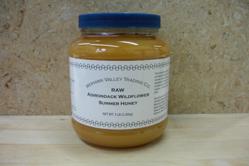
Raw wildflower honey is often used by pollen allergy sufferers to lessen their sensitivity to pollen by eating 1 to 2 teaspoons of it each day, said Mary Ross of the Mohawk Valley Trading Company where they specialize in raw varietal honey. Varietal honey is made primarily from the nectar of a particular type of blossom or flower. To capture the unique character and flavor of the blossom or flower, beekeepers must study botanical bloom and flowering patterns when planning hive placement.


The idea is that like a vaccine, by introducing small amounts of pollen into their system a little bit at a time by eating raw honey, a tolerance to pollen allergens is built up.


However, Ross continued, when buying honey for its health-benefits, it must be raw honey. Heating honey (pasteurization) destroys the all of the pollen, enzymes, propolis, vitamins, amino acids, antioxidants, and aromatics. Honey that has been heated and filtered is called commercial, liquid or regular honey. Before purchasing, make sure to ask if it is raw honey."


Empire State Honey Producers Association - Alexandria Bay, NY


Southern Tier Beekeepers Association Chenango, NY


Southern Adirondack Beekeepers Association - Ballston Spa, NY


About Honey Bees


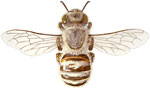
Bees are insects that are related to wasps and ants and there are approximately 20,000 known species of bees found on every continent except Antarctica. Honeybees (Apis mellifera) are not native to the United States as they were introduced by Europeans to produce honey and beeswax. Honeybees are responsible for pollinating 80% of flowering crops, and without them the worlds food supply would be dramatically reduced.


As people become more conscious of the important role that honeybees play in their daily lives, beekeeping is becoming more mainstream and is now allowed in many urban and suburban municipalities. Since 2006, beekeepers in the North America and Europe have noticed a mystifying occurrence called Colony Collapse Disorder (CCD) in which worker bees from a beehive or European honey bee colony abruptly disappear, leaving the queen and insect larvae behind, unable to fend for themselves. While such disappearances have occurred throughout the history of apiculture, the term colony collapse disorder was first applied to a drastic rise in the number of disappearances of Western honey bee colonies in North America in late 2006.


In a 2013, a formal review by the European Food Safety Authority stated that recent studies show that neonicotinoid pesticides, some of the most widely used pesticides in the world, pose an unacceptably high risk to bees, and that the industry-sponsored science upon which regulatory agencies' claims of safety have relied is flawed and possibly deliberately deceptive.


Honey has been used by humans since ancient times for its health benefits and as a sweetener and flavoring for many foods and beverages, with tea being the most popular. Next to maple syrup, it is the most commonly used natural sweetener in North America.


Honey bees make honey by collecting nectar from flowers and regurgitating it into beeswax honeycombs inside their hive. Beeswax is a natural wax produced in the hive of honey bees of the genus Apis and its most popular uses are beeswax candles and as an ingredient in natural skin care products.


The flavor and color of honey is determined by the type of flower the bees gather the nectar from; therefore, when cooking or baking with honey it is a good idea to taste the honey before using it in a recipe. For example: a dark honey like tulip poplar-black locust honey will result in a strong, heavy, pungent flavor, whereas orange blossom honey will result in a delicate orange flavor. Dark-colored honey is considered to be higher in minerals and antioxidants than light-colored honey, and one of the most well-known dark-colored honeys is buckwheat honey. Raw buckwheat honey contains a higher amount of minerals and an antioxidant called polyphenol, which gives it its dark color. The health benefits of buckwheat honey are many and well known.


The rawest honey available is comb honey which is sections of the hexagonal-shaped beeswax cells of the honeycomb that contain raw honey that have been cut from the wooden frames of a beehive.


Using raw honey is a long-term investment strategy for optimal health and personal care; the dividends are overall mental, physical and spiritual well-being. Like a blue chip stock, raw honey should be included in any health-conscious consumers immune system boosting portfolio and the return on investment of substituting honey for refined sugar in the human diet is incalculable.


Another product made by honey bees and used by humans is bee propolis; a resinous substance that honey bees collect from tree buds and bark or other botanical sources and mix with beeswax, nectar and pollen. This mixture is used by bees to seal gaps in the hive and by humans for its health benefits and as a traditional, natural or homeopathic medicine.


The Mohawk Valley Trading Company offers the highest-quality unprocessed natural products they can produce, namely maple syrup, honey, beeswax and natural personal care products. In addition, they offer natural stone, tea and spices from around the world.


Hours of operations are 7:00 a.m. to 7:00 p.m. EST, seven days a week. Reach them at (315)-519-2640 to learn more.


Related Skin Care Press Releases

Beekeeping and Honey Label T-Shirts: 15% Discount


Utica, NY (PRWEB) May 15, 2013

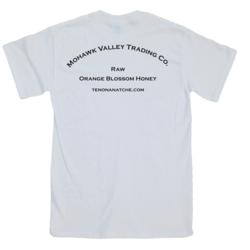
In their effort to support and promote beekeeping, sustainable agriculture, local, small and family owned farms and other local food sources, Crooked Brook is offering a 15% discount off beekeeping and honey logo-label custom printed t-shirts from 5/15 to 5/22/2013 with the promo code "522013".


Custom t-shirts are one of the most inexpensive yet cost effective marketing tools available. One of the advantages they have over other promotional products is that wherever people wearing t-shirts with a logo or slogan on it go; the brand or message goes. It is a great way to build awareness about a cause, goods or services.


We have T-shirt give aways all the time, said Mary Ross of the Mohawk Valley Trading Company where they specialize in varietal raw honey. They are a great way to get your name out there.


Varietal honey is made primarily from the nectar of a particular type of blossom or flower. To capture the unique character and flavor of the blossom or flower, beekeepers must study botanical bloom and flowering patterns when planning hive placement which will determine the time of the harvest.


Although the most popular method of printing t-shirts is screen printing, Crooked Brook t-shirts are printed using Direct To Garment Printing (DTG) which is the process of using inkjet printers to print an image directly onto t-shirts without the use of screens like with screen printing, which requires a lot of setup e.g., creating screens for each color. In addition, DTG printing uses eco-friendly, water soluble ink, unlike some screen printing methods that layer Plastisol (a suspension of PVC particles in a plasticizer) on top of the t-shirt. The only requirement for DTG printing is for the image to be high resolution, resulting in photograph quality printing with no setup fee or minimums for custom t-shirts.


About T-Shirts


The t-shirt evolved from undergarments used in the 19th century, through cutting the one-piece "union suit" underwear into separate top and bottom garments, with the top long enough to tuck under the waistband of the bottoms. By the Great Depression, the t-shirt was often the default garment to be worn when doing farm or ranch chores, as well as other times when modesty called for a torso covering but conditions called for lightweight fabrics.


T-shirts, with and without buttons, were adopted by miners and stevedores during the late 19th century as a convenient covering for hot environments.


T-shirts, as a slip-on garment without buttons, originally became popular in the United States when they were issued by the U.S. Navy during or following the Spanish American War. These were a crew-necked, short-sleeved, white cotton undershirt to be worn under a uniform. It became common for sailors and Marines in work parties, the early submarines, and tropical climates to remove their uniform "jacket", wearing (and soiling) only the undershirt.


Named the t-shirt due to the shape of the garment's outline, it soon became popular as a bottom layer of clothing for workers in various industries, including agriculture. The t-shirt was easily fitted, easily cleaned, were made in various colors and patterns and inexpensive, and for this reason it became the shirt of choice for young boys.


About Honey


Honey has been used by humans since ancient times for its health benefits and as a sweetener and flavoring for many foods and beverages, with tea being the most popular. Next to maple syrup, it is the most commonly used natural sweetener in North America.


Honey bees make honey by collecting nectar from flowers and regurgitating it into beeswax honeycombs inside their hive. Beeswax is a natural wax produced in the hive of honey bees of the genus Apis and its most popular uses are beeswax candles and as an ingredient in natural skin care products.


The flavor and color of honey is determined by the type of flower the bees gather the nectar from; therefore, when cooking or baking with honey it is a good idea to taste the honey before using it in a recipe. For example: a dark honey like tulip poplar-black locust honey will result in a strong, heavy, pungent flavor, whereas orange blossom honey will result in a delicate orange flavor. Dark-colored honey is considered to be higher in minerals and antioxidants than light-colored honey, and one of the most well-known dark-colored honeys is buckwheat honey. Raw buckwheat honey contains a higher amount of minerals and an antioxidant called polyphenol, which gives it its dark color. The health benefits of buckwheat honey are many and well known.


Using raw honey is a long-term investment strategy for optimal health and personal care; the dividends are overall mental, physical and spiritual well-being. Like a blue chip stock, raw honey should be included in any health-conscious consumers immune system boosting portfolio and the return on investment of substituting honey for refined sugar in the human diet is incalculable.


"Beekeeping for Dummies" Author, Howland Blackiston, to Speak Saturday, June 8th at the Keene Public Library, Keene, New Hampshire


Keene, New Hampshire (PRWEB) May 20, 2013

The Monadnock Beekeepers Association has invited "Beekeeping for Dummies" author Howland Blackiston to speak Saturday, June 8th at the Keene Public Library in the auditorium from 10:00 AM -12:00PM. Doors open at 9:00 AM. Admission is free for members and $ 15 for non members. Attendees are welcome to bring books for an autograph.


Howland Blackiston has been keeping bees since 1981. He has written many articles on beekeeping and appeared on dozens of television and radio programs, including CNBC, CNN, NPR, The Discovery Channel, and Sirius Satellite Radio. Howland has been a keynote speaker at conferences in more than 40 countries, is the past president of the Back Yard Beekeepers Association, and is the co-founder of http://www.bee-commerce.com.


"Beekeeping For Dummies" is a book on an increasingly popular hobby. For both enjoyment and profit, beekeeping has become a booming enterprise. This easy-to-follow guide removes the mystery from this pastime and covers everything from the benefits of keeping bees, aiding the environment to enjoying homemade honey and wax products. It includes detailed, full-color photographs that show how to install a package of bees in your hive, what to expect from bees (they are incredibly well-tempered during swarming), and how to spot-and solve-common beekeeping problems.


As the backyard beekeeping movement grows, officials in many municipalities are changing legislation and zoning laws to enable people to keep bee hives in cities. said Mary Ross of the Mohawk Valley Trading Company where they specialize in varietal raw honey. This is a great book for anybody looking to get started beekeeping and I encourage anybody in the Monadnock region of New Hampshire who has an interest in beekeeping in to attend this event.


The Monadnock Beekeepers Association is local chapter of the New Hampshire Beekeepers Association, established in December of 2003 to support and educate beekeepers in the Monadnock region of New Hampshire.


For more information, please visit: http://www.monadnockbeekeepers.com/


About Honey Bees


Bees are insects that are related to wasps and ants and there are approximately 20,000 known species of bees found on every continent except Antarctica. Honeybees (Apis mellifera) are not native to the United States as they were introduced by Europeans to produce honey and beeswax. Honeybees are responsible for pollinating 80% of flowering crops, and without them the worlds food supply would be dramatically reduced.


As people become more conscious of the important role that honeybees play in their daily lives, beekeeping is becoming more mainstream and is now allowed in many urban and suburban municipalities. Since 2006, beekeepers in the North America and Europe have noticed a mystifying occurrence called Colony Collapse Disorder (CCD) in which worker bees from a beehive or European honey bee colony abruptly disappear, leaving the queen and insect larvae behind, unable to fend for themselves. While such disappearances have occurred throughout the history of apiculture, the term colony collapse disorder was first applied to a drastic rise in the number of disappearances of Western honey bee colonies in North America in late 2006.


In a 2013, a formal review by the European Food Safety Authority stated that recent studies show that neonicotinoid pesticides, some of the most widely used pesticides in the world, pose an unacceptably high risk to bees, and that the industry-sponsored science upon which regulatory agencies' claims of safety have relied is flawed and possibly deliberately deceptive.


Honey has been used by humans since ancient times for its health benefits and as a sweetener and flavoring for many foods and beverages, with tea being the most popular. Next to maple syrup, it is the most commonly used natural sweetener in North America.


Honey bees make honey by collecting nectar from flowers and regurgitating it into beeswax honeycombs inside their hive. Beeswax is a natural wax produced in the hive of honey bees of the genus Apis and its most popular uses are beeswax candles and as an ingredient in natural skin care products.


The flavor and color of honey is determined by the type of flower the bees gather the nectar from; therefore, when cooking or baking with honey it is a good idea to taste the honey before using it in a recipe. For example: a dark honey like tulip poplar-black locust honey will result in a strong, heavy, pungent flavor, whereas orange blossom honey will result in a delicate orange flavor. Dark-colored honey is considered to be higher in minerals and antioxidants than light-colored honey, and one of the most well-known dark-colored honeys is buckwheat honey. Raw buckwheat honey contains a higher amount of minerals and an antioxidant called polyphenol, which gives it its dark color. The health benefits of buckwheat honey are many and well known.


The rawest honey available is comb honey which is sections of the hexagonal-shaped beeswax cells of the honeycomb that contain raw honey that have been cut from the wooden frames of a beehive.


Using raw honey is a long-term investment strategy for optimal health and personal care; the dividends are overall mental, physical and spiritual well-being. Like a blue chip stock, raw honey should be included in any health-conscious consumers immune system boosting portfolio and the return on investment of substituting honey for refined sugar in the human diet is incalculable.


Another product made by honey bees and used by humans is bee propolis; a resinous substance that honey bees collect from tree buds and bark or other botanical sources and mix with beeswax, nectar and pollen. This mixture is used by bees to seal gaps in the hive and by humans for its health benefits and as a traditional, natural or homeopathic medicine.